

Backpacks for Underprivileged Students Matter
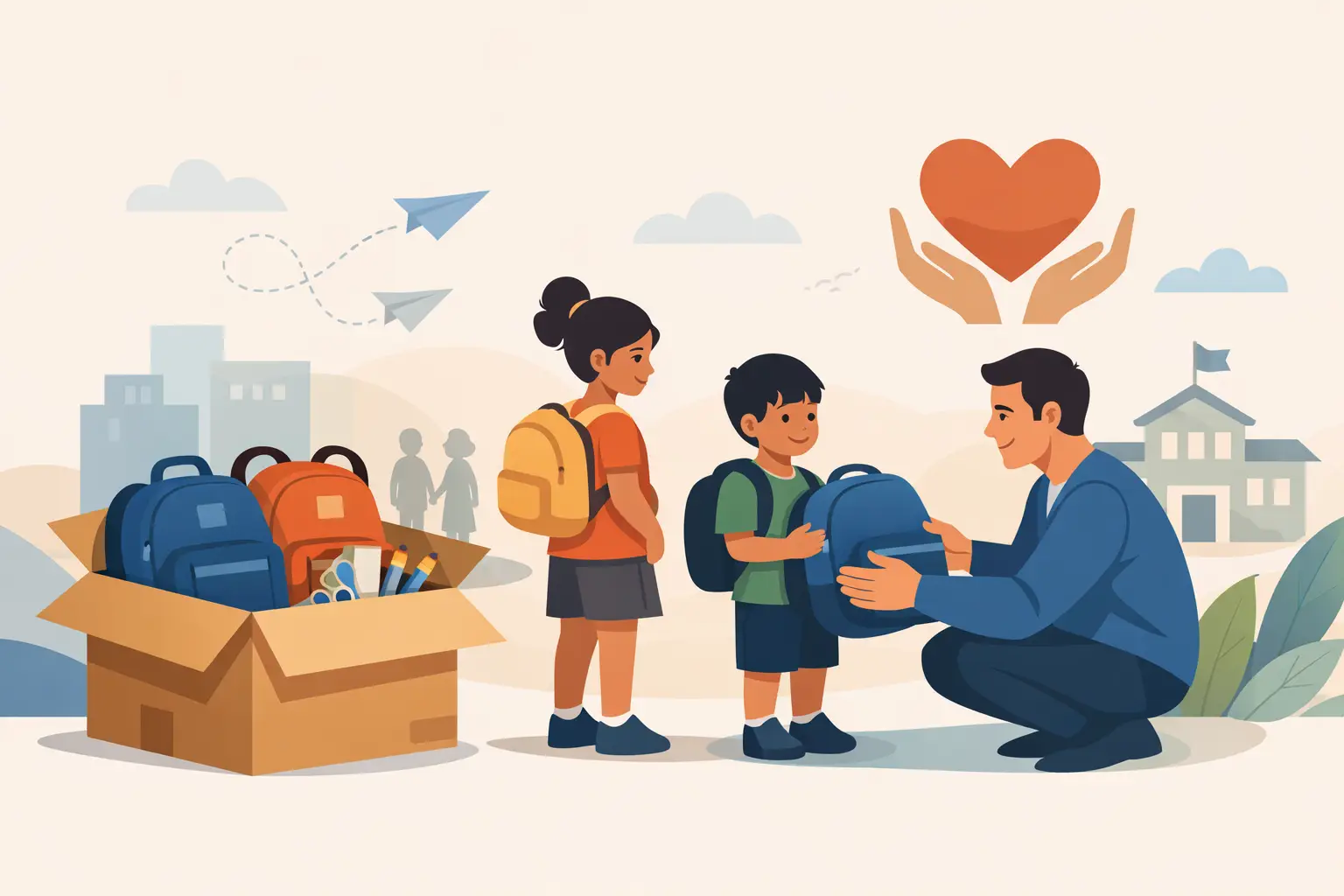
A child should not have to choose between showing up prepared and showing up embarrassed. Yet for many families, that is the reality of back-to-school season. Backpacks for underprivileged students are often treated like a small supply item, but they can shape how a child walks into class, organizes their day, and feels about learning from the very first bell.
When a student starts school without the basics, the gap shows up quickly. Papers get lost. Homework comes back wrinkled or not at all. Lunches are harder to pack. Library books go missing. Even more than that, a child may feel singled out before a lesson even begins. Something as practical as a backpack becomes part of whether a student feels ready, included, and confident.
Why backpacks for underprivileged students matter so much
A backpack is not a luxury. It is part of basic school readiness. For younger students especially, having one reliable place to keep folders, pencils, take-home assignments, and personal items helps create routine. Routine matters because it lowers stress. It helps children know where their things are and what to expect each day.
For parents and caregivers, that consistency matters too. When school papers actually make it home, families are better able to stay informed and involved. Permission slips are less likely to disappear. Reading logs, math practice, and teacher notes are easier to track. A backpack supports the connection between home and school in a way people often overlook.
There is also a dignity piece that cannot be ignored. Children notice who has what. They notice when a zipper is broken, when a bag is torn, or when they have to carry supplies in a grocery sack. The emotional weight of that experience can be heavy for a child who already faces barriers. A sturdy, clean backpack tells a student, in a very real way, you belong here and you deserve to be prepared.
The impact goes beyond school supplies
People sometimes think the real issue is what goes inside the backpack, not the backpack itself. In truth, both matter. School supplies are essential, but they are harder to use well without something to hold them, protect them, and keep them organized.
A student with notebooks but no backpack may still struggle to keep work together. A child with pencils and folders but no reliable bag may leave items behind, lose assignments, or stop bringing materials home. In that sense, the backpack is not separate from academic support. It is part of the system that allows support to work.
This is especially true for students receiving tutoring or extra help in reading and math. Practice materials need to travel back and forth. Progress depends on repetition, parent communication, and follow-through. When a child has a safe place to carry those materials, learning support becomes more consistent.
That is one reason community nonprofits and school partners often see backpacks as more than a donation item. They are a practical tool that helps educational investments stick.
What makes a good backpack donation
Not every backpack is equally useful. A generous donation can still miss the mark if the bag is too flimsy, too small, or not age-appropriate. Families living on tight budgets often need items that last, not just items that look good on distribution day.
A strong backpack for an elementary or middle school student should have comfortable straps, enough space for folders and notebooks, and a design that can handle daily wear. Water resistance helps, but it is not always necessary if budget is limited. Multiple compartments can be helpful for organization, though too many can be frustrating for younger children.
There are trade-offs. Trendy bags may excite students, but simple classic designs often stretch donor dollars further and work for a wider range of ages. Very cheap bags may allow an organization to serve more children at once, but if they break within weeks, families are right back where they started. The best choice is usually the one that balances durability, function, and cost.
Color and style also matter more than some people assume. Students want to feel proud of what they carry. Neutral or broadly appealing designs can help, especially when organizations serve many age groups and do not have the ability to personalize every item. The goal is practical support without making a child feel like they received an afterthought.
Backpacks and the confidence to learn
Academic success is not built on confidence alone, but confidence affects how children participate, ask for help, and respond to setbacks. Starting the year with the right essentials can remove one source of anxiety. That emotional relief creates room for focus.
A child who feels prepared may be more willing to raise a hand, take homework seriously, or engage in tutoring sessions. That may sound subtle, but small shifts in mindset can change a school year. Children learn best when they feel safe, seen, and equipped.
This is why support should never be framed as charity that a child must feel grateful to receive. It should be framed as community care and educational equity. Every student deserves the tools to learn. That includes the tools that seem ordinary to those who have always had them.
For mission-driven organizations like You're All That Inc., this connection is clear. Educational support works best when it addresses both academics and access. Tutoring strengthens skills, while essentials like backpacks help remove barriers that can quietly hold students back.
How communities can help provide backpacks for underprivileged students
The strongest backpack efforts are built locally. Schools, nonprofits, faith communities, small businesses, and neighborhood groups each see a different part of the need. When they work together, support becomes more targeted and more consistent.
Families often need help most at predictable times, especially before school starts, after winter break, and when a child transfers schools midyear. A one-time backpack drive can make a meaningful difference, but ongoing support serves families who face need beyond August and September.
That means communities should think bigger than a single event. Backpack programs can be tied to tutoring enrollment, school supply closets, family resource fairs, and student mentoring. They can also be informed by teachers and school staff who know which students are arriving without basic materials.
For donors, giving is most effective when it respects real-world costs. If an organization requests funds instead of random bag donations, there is often a reason. Buying in bulk can reduce costs and help match supplies to student age groups. Financial gifts may also allow teams to include notebooks, pencils, hygiene items, or uniforms alongside the backpack.
For volunteers, the work goes beyond handing out bags. Sorting supplies, packing kits, helping at distribution events, and welcoming families with kindness all shape the experience. A child should leave feeling encouraged, not labeled.
The difference between giving items and meeting needs
It is easy to focus on numbers alone. How many backpacks were collected. How many were distributed. How many students were served. Those numbers matter, but they do not tell the whole story.
Real impact asks a deeper question: did the child receive what they actually needed to succeed? A backpack that fits a kindergartener poorly or wears out by October may count in a report, but it does not fully solve the problem. A thoughtful approach considers age, durability, timing, and the family’s broader situation.
Sometimes the greatest need is not the backpack itself but the support wrapped around it. A student may also need tutoring, help with school forms, or encouragement after falling behind. That is why the most effective school-readiness efforts connect practical items with real relationships.
When communities see backpacks as part of a larger promise to children, the work changes. It becomes less about a seasonal donation and more about standing beside students as they learn, grow, and build confidence.
A simple item with lasting meaning
For many adults, a backpack is forgettable. For a child, it can mean showing up like everyone else. It can mean bringing home the worksheet that leads to extra practice, carrying the book that sparks reading confidence, or walking into class without the fear of being noticed for the wrong reason.
Backpacks for underprivileged students do not erase the larger challenges families face. They do something quieter and just as important. They remove one barrier, restore a measure of dignity, and make it easier for a child to focus on what school is meant to offer: the chance to learn, belong, and believe in what is possible.
Sometimes that is where change begins - with one child, one school day, and one backpack packed with both supplies and hope.