


English Tutoring for Struggling Students
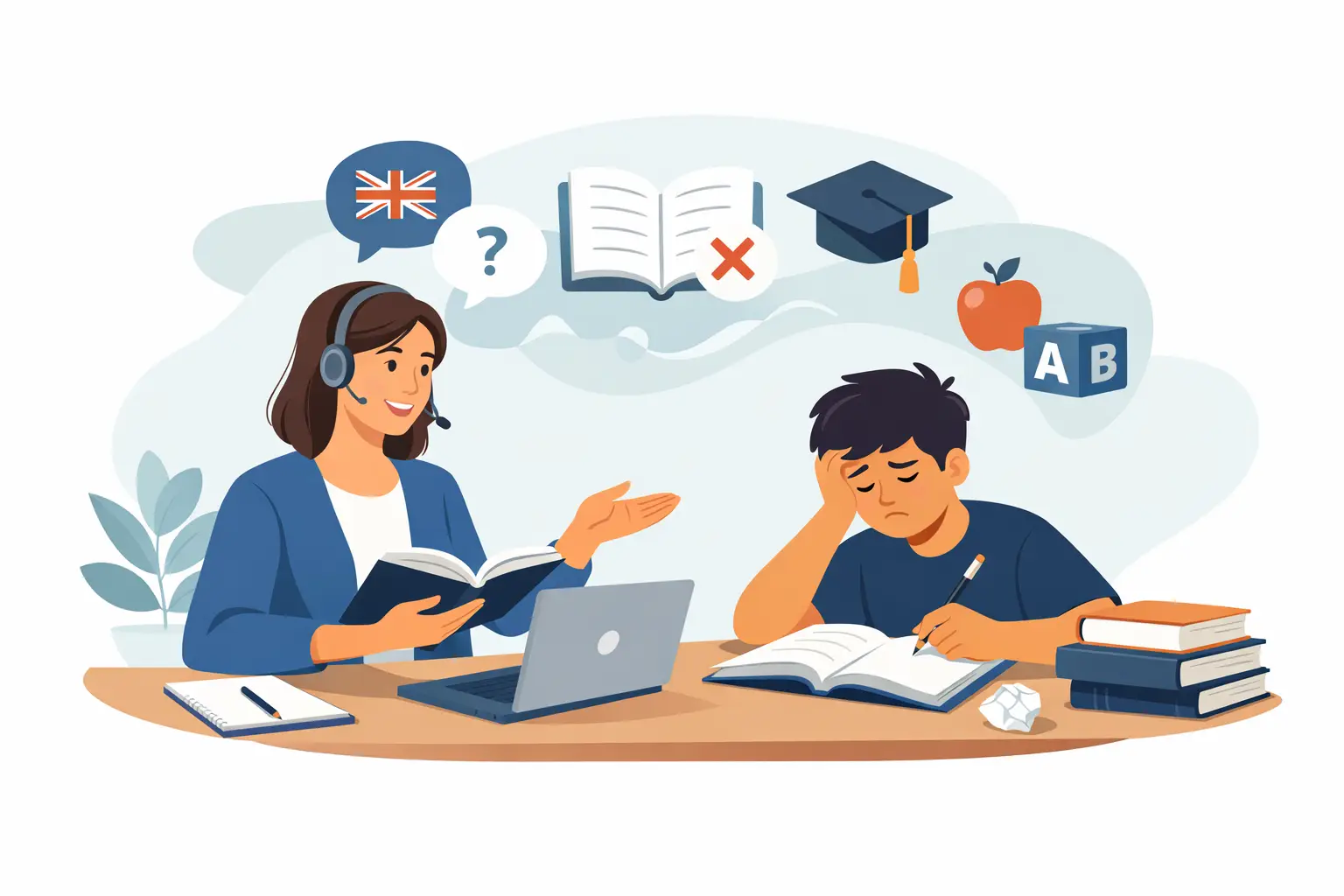
A child who says, "I hate reading," is not usually rejecting stories, ideas, or learning itself. More often, that child is tired of feeling behind. They are tired of guessing at words, freezing during class, and watching their confidence shrink with every worksheet they do not understand. That is why english tutoring for struggling students matters so much. It is not just academic support. It is a chance to help a child feel capable again.
For many families, the struggle shows up quietly at first. A student avoids reading aloud. Homework that should take 20 minutes stretches into an hour. Spelling words never seem to stick. Writing assignments end in tears, frustration, or silence. Over time, English becomes more than a subject. It becomes a place where a child expects to fail.
The right tutoring can interrupt that pattern.
Why English tutoring for struggling students matters early
When a student falls behind in English, the impact rarely stays in English class. Reading affects science directions, social studies passages, word problems in math, and even classroom behavior. If a child cannot easily read instructions or express what they know in writing, their full ability often stays hidden.
That is especially true in elementary and middle school, when students are building the skills they will carry into every later grade. A young learner who struggles with phonics may also struggle with fluency. A student who reads slowly may avoid books altogether. A child with strong ideas may earn low grades simply because writing them down feels overwhelming.
Early support changes the story. It gives students time to strengthen foundation skills before frustration hardens into self-doubt. It also helps families address the problem with hope instead of panic.
What struggling students actually need from tutoring
Not every child struggles for the same reason, so not every tutoring plan should look the same. That is one of the most important truths in english tutoring for struggling students. A student who mixes up letter sounds needs different help than a student who reads well but cannot organize a paragraph.
Good tutoring starts by noticing the real barrier. Sometimes the issue is decoding. Sometimes it is vocabulary. Sometimes it is reading comprehension, grammar, sentence structure, or confidence. Sometimes it is a mix of all of them.
Children also need tutoring that meets them with patience. Many struggling students have already had the experience of being corrected more than encouraged. They do not need more pressure. They need someone who can slow down, explain clearly, celebrate small wins, and build trust.
That trust matters more than people realize. A child who feels safe asking, "Can you explain that again?" is a child who can begin to grow.
The most effective tutoring is personal
The strongest tutoring sessions are not built around generic worksheets alone. They are built around the student in front of the tutor. That means noticing whether the child learns best by reading aloud, using examples, moving step by step, or practicing in shorter bursts.
It also means setting realistic goals. For one student, progress may look like reading a full page with fewer pauses. For another, it may mean writing three complete sentences independently. These gains can seem small from the outside, but for a child who has been struggling, they are huge.
Signs a child may need English tutoring
Some children clearly ask for help. Others hide their struggle by acting silly, shutting down, or saying they are bored. Families and teachers often spot the problem through patterns rather than one dramatic moment.
A student may need extra support if they regularly avoid reading, have trouble sounding out words, read far below grade level, cannot retell what they just read, or become upset during writing assignments. Weak spelling, unfinished homework, low test scores, and declining confidence are also common signs.
Still, it depends on the child. A temporary dip after a school transition may improve with time and classroom support. A long-running pattern usually needs something more direct. The goal is not to label children quickly. The goal is to respond before they begin to believe they are simply "bad at school."
What families should look for in a tutoring program
A caring tutoring program should do more than assign extra practice. It should help children feel seen, supported, and capable of progress.
First, look for an approach that builds skills in manageable steps. Children who struggle in English often need lessons broken down clearly, with repetition that feels encouraging rather than punishing. Fast-paced instruction may work for some learners, but for a child who is already overwhelmed, slower and steadier often works better.
Second, communication matters. Families should know what a student is working on, where growth is happening, and what can be practiced at home. The best tutoring relationships feel like a partnership between tutor, caregiver, and child.
Third, pay attention to confidence-building. Academic progress and emotional progress belong together. A student who starts volunteering answers in class, reading to a younger sibling, or attempting homework with less fear is showing real success.
Tutoring should fit real family life
Access matters. For many families, the challenge is not just finding quality help. It is finding help that is affordable, consistent, and practical. Transportation, schedules, school demands, and basic household needs can all affect whether tutoring is possible.
That is why community-based educational support is so valuable. When tutoring is paired with practical resources and caring relationships, families have a better chance of staying engaged. Children do better when support is not treated like a luxury, but like a right.
How tutoring helps beyond grades
Better grades are meaningful, but they are not the whole story. English tutoring often creates change that reaches into everyday life.
A student who improves in reading may begin to participate more in class discussions. A child who learns how to organize thoughts in writing may find it easier to speak up, ask for help, or explain what they feel. Even behavior can improve when school stops feeling like a constant source of embarrassment.
This is one reason mission-driven tutoring matters so deeply in under-resourced communities. Academic struggles do not happen in isolation. Sometimes children are carrying stress from housing instability, financial pressure, school changes, or lack of supplies. They may be capable and bright, yet still need more support than a classroom alone can provide.
When a community steps in with tutoring, encouragement, and educational essentials, the message to that child is powerful: you matter, and your learning matters.
English tutoring for struggling students works best with encouragement at home
Families do not need to be English experts to make a difference. Small, steady encouragement at home can reinforce what a child learns in tutoring.
Reading together for a few minutes, asking a child to explain a story in their own words, noticing improvement in spelling, or praising effort after a hard assignment can all help. What children need most is not perfection. They need adults who keep showing them that growth is possible.
It is also okay if progress is not immediate. Some students make quick gains once they receive focused help. Others need more time, especially if their confidence has taken a hit. Slow progress is still progress when the support is consistent and caring.
For organizations like You're All That Inc., this work is bigger than tutoring sessions alone. It is about building a circle of support around each child - families, volunteers, donors, educators, and neighbors who believe every student deserves the tools to succeed.
A stronger future starts with one supported child
There is nothing small about helping a child read a paragraph with confidence, write a complete thought, or raise a hand without fear. Those moments shape how students see themselves. They also shape what becomes possible next.
English tutoring for struggling students is not about forcing children to catch up on someone else’s timeline. It is about giving them patient, practical support so they can build skills, confidence, and hope at the same time. When a child feels supported instead of ashamed, learning begins to open back up.
Sometimes the first step is simply making sure no child has to struggle alone.