


How to Encourage Kids Who Hate Math at Home
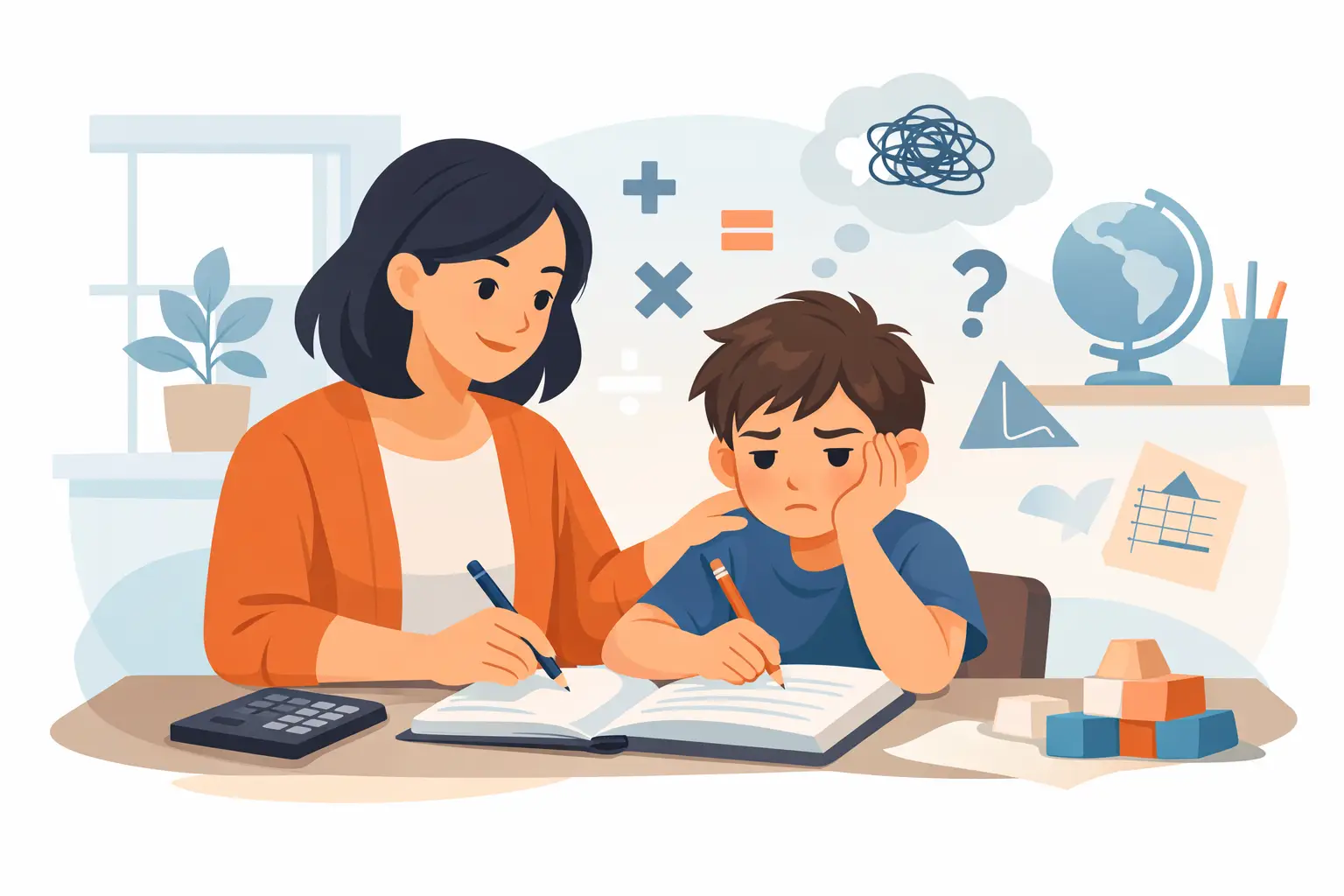
A child who says, “I hate math,” is rarely rejecting numbers alone. They may be protecting themselves from the feeling of getting an answer wrong, falling behind classmates, or facing a worksheet that seems impossible before they even begin. Learning how to encourage kids who hate math starts with seeing the emotion underneath the resistance.
For many families, math frustration can become a daily battle at the kitchen table. But children do not need more pressure to succeed. They need steady support, room to make mistakes, and adults who remind them that their ability can grow. Every child has the right to learn, and every small moment of encouragement can help them believe they belong in the classroom.
Start With the Feeling, Not the Worksheet
When a child is upset about math, it is tempting to jump straight into teaching the problem. First, pause. A calm response such as, “That looks frustrating. Let’s figure out which part feels hard,” can lower the pressure and open the door to learning.
Avoid labels like “not a math person” or “bad at math,” even when a child says them about themselves. Those words can turn a temporary struggle into part of a child’s identity. Try replacing them with language that honors effort: “You have not learned this part yet,” or “This problem is challenging, but we can take it one step at a time.”
This does not mean pretending math is always fun. Some skills require repetition, and some assignments will remain difficult. The goal is not to convince a child that every problem is exciting. The goal is to help them trust that hard moments are manageable.
Make Math Feel Safe to Try
Children who hate math often expect embarrassment or disappointment when they make a mistake. A safe learning environment changes that expectation. Let them see adults work through errors, too. You might say, “I added too quickly. Let me check my work,” instead of quietly correcting yourself.
Praise specific actions rather than only correct answers. Notice when your child rereads a question, uses a drawing to solve a problem, asks for help, or keeps going after getting stuck. These are the habits that build confidence over time.
It also helps to separate practice from judgment. A low score or missed problem is information about what needs support, not proof of what a child can or cannot become. If homework ends in tears night after night, speak with the teacher or seek tutoring support. Struggling alone for too long can make math anxiety stronger.
How to Encourage Kids Who Hate Math Through Daily Life
Math becomes less intimidating when children recognize it outside a textbook. Everyday routines give them low-pressure chances to practice without the feeling of being tested.
At the grocery store, ask which item costs less or invite your child to help estimate the total. While cooking, let them measure ingredients, double a recipe, or divide snacks fairly. During a drive, they can notice house numbers, compare travel times, or count how many minutes remain before arriving.
Games can help, too. Card games build number sense, board games encourage counting and strategy, and building toys create opportunities to explore shapes, patterns, and measurement. The activity does not need to be labeled as a math lesson. A child who is relaxed and engaged is already more ready to learn.
Real-life practice works best when it stays playful. If your child is tired after school or already anxious, asking a string of questions can feel like another assignment. Offer an invitation, not a quiz. “Want to help me split these apples?” goes further than “What is six divided by two?”
Keep Practice Short and Predictable
Long, tense homework sessions teach children to dread math. Short, consistent practice is usually more effective, especially for elementary and middle school students. Ten focused minutes can create more progress than an hour of frustration.
Choose a time when your child is fed, rested, and able to concentrate. Some children need a snack and a movement break before homework. Others do better early in the morning or after a quiet period at home. There is no single schedule that works for every family.
Create a simple routine: review one skill, try two or three problems, then stop while your child still has some energy. End with something they can do successfully whenever possible. That final feeling matters. It helps a child return tomorrow believing, “I can handle this.”
If schoolwork is consistently far beyond your child’s current skill level, more practice alone may not solve the problem. They may need the concept explained differently or earlier gaps addressed. Individualized tutoring can be especially helpful because it meets a student where they are rather than expecting them to keep pace with a one-size-fits-all lesson.
Teach One Step at a Time
A page of problems can look overwhelming because children are trying to hold too many steps in their minds at once. Break the task into smaller pieces. Cover the rest of the worksheet with a blank sheet of paper, work on one problem, and celebrate completing that step before moving on.
Ask your child to explain what they do understand. For example, they may know how to add but feel confused about what a word problem is asking. Starting with what is already familiar creates a bridge to the next skill.
Visual tools can make abstract ideas more concrete. Use coins, buttons, beans, drawings, number lines, or blocks to show what a problem means. A child may understand multiplication more easily by making equal groups than by memorizing a rule first. As understanding grows, they can gradually rely less on the objects.
Patience matters here. Giving the answer may end the conflict quickly, but it can also send the message that the child cannot solve problems independently. Instead, offer a small next step: “What do you notice?” “Can we circle the numbers?” or “Which operation might help?” Give them wait time before stepping in.
Build Confidence Beyond Grades
Grades matter, but they should not be the only measure of growth. A child who moves from avoiding math entirely to attempting one problem without giving up has made meaningful progress. Recognizing that progress protects motivation.
Help children connect math to dreams they already have. A future artist uses patterns and measurement. A basketball fan can explore scores and statistics. A young entrepreneur can practice budgeting. A child who loves music can find fractions in rhythm. Math is not a gatekeeper reserved for a few gifted students. It is a tool children can use to understand and shape their world.
Support also means making sure children have what they need to participate fully. A quiet place to work, pencils, paper, internet access, consistent meals, and caring adult attention can all affect learning. For families facing financial or scheduling barriers, community tutoring programs, schools, and local education organizations can provide a needed layer of support. No child should have to carry academic challenges without help.
Invite a Team Around Your Child
Parents and caregivers do not have to become math teachers to make a powerful difference. Share what you are noticing with your child’s teacher. Ask which skills need the most attention and what language or strategies the class is using. A consistent approach between home and school can reduce confusion.
Tutors, volunteers, older siblings, and trusted mentors can also help a child see math through a fresh lens. Sometimes a student needs a different explanation. Sometimes they need someone outside the family to say, “I believe you can do this.” Both can be transformative.
At You're All That Inc., we believe empowering education takes a community. When families, educators, volunteers, and supporters work together, children gain more than academic help. They gain the confidence to raise their hand, try again, and imagine a future filled with opportunity.
The next time your child says they hate math, you do not need a perfect lesson plan. Offer patience, choose one small step, and stay beside them through it. A child who feels supported today may be willing to try again tomorrow, and that willingness is where real learning begins.