


AI Tutoring Can Support Every Child’s Learning
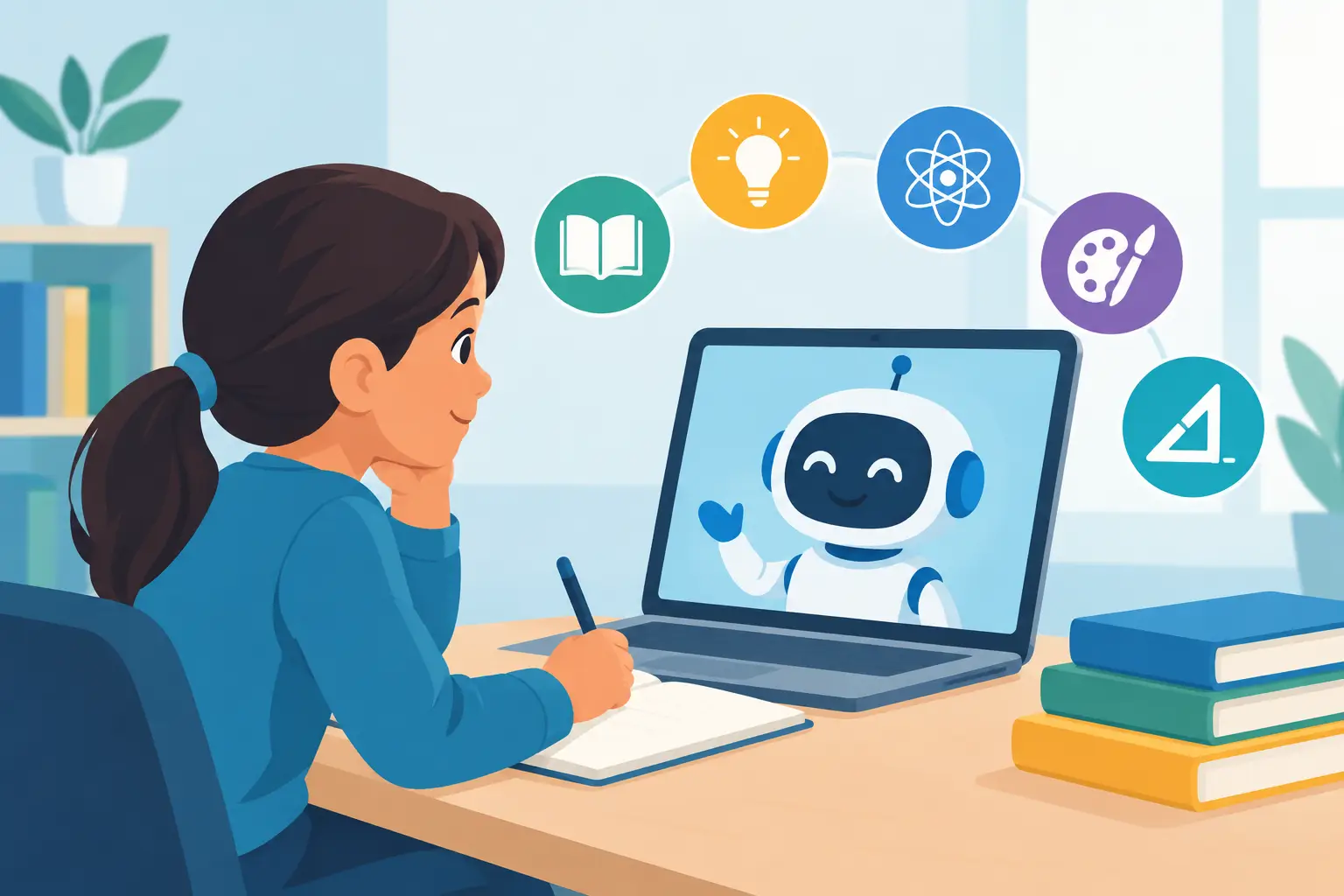
A child stuck on a math problem does not need more pressure. They need someone to notice where the confusion began, explain it another way, and remind them that one hard problem does not define what they can do. AI tutoring can help create more of those learning moments, especially when it is used with care, guidance, and a real commitment to every child’s right to learn.
For families balancing work, transportation, school assignments, and tight budgets, extra academic support is not always easy to find. A student may need help with reading comprehension at 7 p.m., multiplication facts on a Saturday morning, or a writing assignment when an adult is doing their best but does not know how to teach the skill. Used responsibly, AI can offer another source of practice and encouragement. It should never replace the trusted adults, teachers, tutors, and community members who help children feel seen.
What AI Tutoring Can Do Well
At its best, AI tutoring gives students a place to ask questions without embarrassment. A child can ask for a simpler explanation, request another example, or work through a problem one step at a time. That repetition matters. Many students do not struggle because they are incapable. They struggle because a lesson moved too quickly, they missed a foundational skill, or they did not feel comfortable raising their hand.
For elementary and middle school students, AI can be especially useful for short, focused practice. In math, it can generate additional problems on fractions, place value, multiplication, or word problems. In English, it can help students identify the main idea of a passage, practice vocabulary, organize a paragraph, or spot a sentence fragment. It can also offer immediate feedback, which helps students connect effort with improvement while the lesson is still fresh.
The value is not just speed. A thoughtful tool can adjust the wording of an explanation and meet a student closer to where they are. One child may understand multiplication through equal groups. Another may need a drawing, a real-life example, or repeated practice with smaller numbers. Personalization can make learning feel less like a test and more like a conversation.
For caregivers, AI can also make it easier to understand what a child is working on. A parent can use it to create practice questions, ask for a plain-language explanation of a school topic, or find ideas for a 15-minute learning routine. That can be helpful when families want to support education but have limited time, limited materials, or difficult memories of their own school experience.
Why a Human Tutor Still Matters
A helpful answer is not the same as a meaningful learning relationship. Children need adults who recognize frustration, celebrate progress, and understand when a student is quietly losing confidence. A human tutor can notice that a child has stopped trying, is rushing to avoid being wrong, or is having trouble reading the instructions rather than solving the math.
Human support also brings context that technology cannot fully provide. A tutor can connect a writing prompt to a child’s interests, encourage a student after a difficult school day, and communicate with caregivers about patterns they are seeing. They can build trust over time. For a child who has heard more criticism than encouragement, that trust may be the foundation that makes academic growth possible.
This is why AI tutoring works best as a support, not a substitute. It can extend practice between tutoring sessions, help prepare questions for a teacher, and give students another way to review a skill. But children should know that they can always turn to a caring adult when an answer feels confusing, unfair, or discouraging.
At You’re All That Inc., we believe academic support should strengthen both skills and self-belief. A backpack, uniform, notebook, or tutoring session can all send the same powerful message: you belong in the classroom, and your future matters.
Setting Boundaries for Safe AI Tutoring
Families and programs should approach AI with curiosity and clear guardrails. Not every tool is designed for young learners, and not every answer it provides will be accurate. Children should be taught that AI can make mistakes, just as people can. They should check answers, show their work, and ask an adult for help when something does not make sense.
Privacy deserves special attention. Students should not share their full name, address, school, phone number, passwords, photos, or personal family details in an AI tool. Adults should review the privacy practices and age requirements of any platform before inviting a child to use it. For younger students, using AI together with a parent, tutor, teacher, or older sibling is often the safest approach.
There is also a difference between getting help and having work done for you. If AI writes a child’s entire book report or solves every homework problem, the student loses the chance to practice thinking. The goal is not a perfect assignment. The goal is for the child to understand more today than they understood yesterday.
A simple family rule can help: ask AI to explain, quiz, give examples, or check work, but not to complete the work without the student’s participation. Students can be encouraged to say, “Help me understand this,” instead of, “Give me the answer.” That one shift builds ownership and keeps learning at the center.
Making AI Support Fair, Not Another Barrier
Technology can widen gaps when only some children have reliable internet, current devices, quiet study spaces, and adults available to help. That is why AI tutoring must be part of a broader commitment to educational equity. A tool alone cannot solve barriers caused by limited access to school supplies, unstable housing, hunger, transportation challenges, or overcrowded classrooms.
Community-based programs can help make the benefits more reachable. Libraries, schools, after-school programs, and nonprofit tutoring spaces can provide supervised access, basic digital literacy, and a safe place for students to learn. Volunteers can help children ask better questions, evaluate answers, and use technology with confidence rather than fear.
Supporters have a role here, too. Donations, volunteer hours, school partnerships, and supplies create the conditions that make academic tools useful. A student may be able to practice vocabulary on a device, but they also need paper to write on, a charged tablet or computer, a dependable adult nearby, and the confidence to keep going when the task is hard. Every form of support works together.
A Practical Routine for Families
AI support is most useful when it is short, structured, and connected to what students are already learning. A 20-minute routine can be enough: five minutes to name the skill, 10 minutes for guided practice, and five minutes for the student to explain what they learned in their own words. If they cannot explain it yet, that is not failure. It simply shows where more support is needed.
For reading, a student might read a short passage, ask for three comprehension questions, and discuss one answer with an adult. For math, they might solve three problems on paper, use AI to check the reasoning, and correct any errors. For writing, they might draft a paragraph first, then ask for feedback on clarity, organization, and grammar. The child’s own thinking should always come first.
Celebrate effort that is specific. Instead of saying only, “Good job,” try, “You kept working after the first answer was wrong,” or, “You explained why you chose that evidence.” Specific encouragement helps children understand that learning grows through persistence, not perfection.
The future of educational support should not be about replacing people with screens. It should be about giving more children timely help, more chances to practice, and more reasons to believe in their own potential. When technology is guided by caring adults and strengthened by a committed community, it can become one more way to tell every child: your questions matter, your growth matters, and you are never alone in learning.