


Tutoring Apps Versus Tutors for K-8 Students
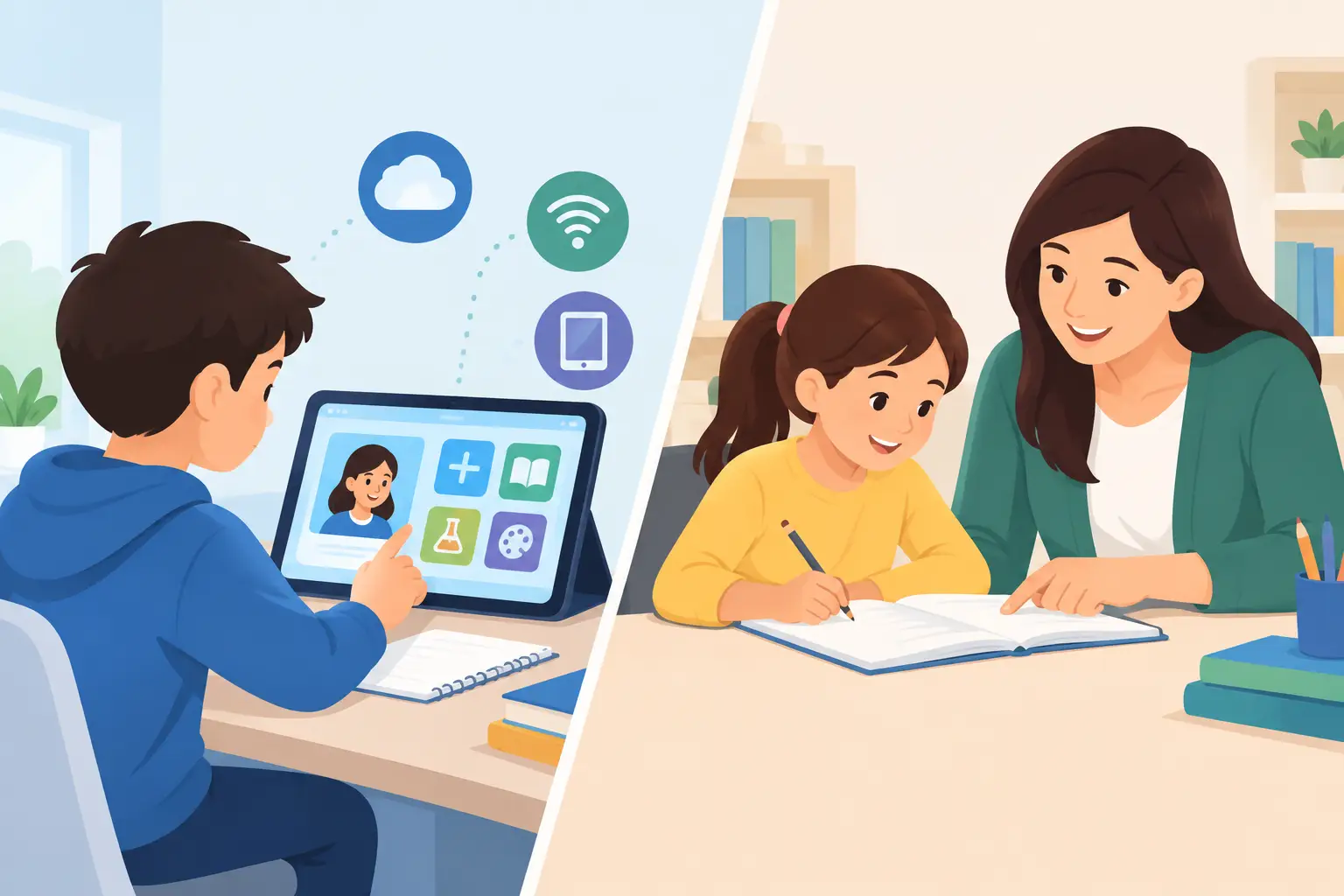
A child can complete every practice problem an app assigns and still feel afraid to raise their hand in math class. Another child may know how to sound out words but need someone beside them to notice the moment frustration turns into, “I can’t do this.” That is where the conversation about tutoring apps versus tutors becomes more than a question of technology. It becomes a question of what each child needs to believe they can learn.
For families working to help K-8 students build stronger English and math skills, both options can have a place. An app may make daily practice more accessible. A tutor can offer encouragement, explanation, and a relationship that helps a child keep going. The best choice is rarely about which option is universally better. It is about matching support to the student, the family’s resources, and the learning goal.
What tutoring apps do well
Tutoring apps can put practice within reach at almost any time. For a caregiver balancing work, transportation, and other children’s schedules, that flexibility matters. A student can review multiplication facts after dinner, read a short passage on a tablet, or work through vocabulary practice without waiting for an appointment.
Many apps also use games, points, colorful feedback, and short lessons to make repetition feel less intimidating. This can be especially helpful for a child who needs more chances to practice a skill without feeling singled out in front of classmates. Immediate feedback can help students recognize a wrong answer and try again while the lesson is still fresh.
Apps are often strongest when the goal is focused and clear. A student who needs extra practice with addition facts, spelling patterns, sight words, or basic reading comprehension may benefit from short, regular sessions. Ten or fifteen minutes of purposeful practice can add up over time.
There are limits, though. An app can identify that an answer is incorrect, but it may not understand why the child chose it. Did the student rush? Misread a word? Forget a step? Feel embarrassed by a previous mistake? Those details matter because they shape the kind of help that will actually move learning forward.
What a tutor can see that an app may miss
A caring tutor does more than review schoolwork. They listen for the hesitation in a student’s voice, notice when a child is guessing, and change the explanation when the first approach does not connect. That human attention is especially valuable when a student has fallen behind or started to believe that they are “bad” at math or reading.
In English, a tutor can pause during a reading passage and ask a child what they think is happening, not just whether they selected the correct answer. They can hear when decoding breaks down, model how to use context clues, and celebrate the moment a student reads a difficult sentence independently.
In math, a tutor can watch a student solve a problem step by step. If the student understands addition but becomes confused when regrouping, the tutor can use drawings, objects, a number line, or a new explanation. The lesson can slow down, speed up, or shift direction based on what the student shows in real time.
Just as important, tutors offer accountability with compassion. A child is more likely to return to a difficult skill when someone remembers what they worked on last week and says, “You made progress. Let’s try the next step together.” Consistency can rebuild confidence, particularly for students whose learning has been interrupted by housing changes, limited school resources, illness, or other challenges outside the classroom.
Tutoring apps versus tutors: the real trade-offs
The choice is not simply convenience versus quality. Families should consider time, cost, access to devices or reliable internet, the child’s independence, and the level of academic need.
An app may be a practical starting point when a student needs routine reinforcement and can stay engaged independently. It can also support a tutor’s work between sessions. For example, a tutor might introduce a strategy for multiplication on Tuesday, and the child can use an app for brief practice throughout the week.
A tutor may be the better first step when a child is struggling to understand grade-level work, avoiding homework, showing strong frustration, or making the same errors repeatedly. Personal support is also valuable when a caregiver wants help understanding school feedback or creating a realistic learning routine at home.
Cost can be a real barrier. Some apps offer free features, but others place the most useful lessons behind a subscription. Private tutoring can also be out of reach for many families. That is why community-based tutoring programs, school supports, libraries, and nonprofit organizations are so vital. Every child deserves meaningful academic help, not only children whose families can afford premium tools.
How families can choose support that fits
Start with the child’s experience, not the product. Ask a few simple questions: What subject feels hardest right now? Does your child understand the lesson but need practice, or do they feel confused about the lesson itself? Can they work independently for a short period, or do they need an adult to keep them focused and encouraged?
Then look for evidence of progress. A good support plan should not rely only on completion badges or time spent on a screen. Notice whether your child explains a strategy more clearly, reads with greater ease, finishes homework with less stress, or begins to participate more confidently in class.
For younger students, adult involvement is especially important. Sit nearby when possible. Ask them to show you one problem they solved or tell you about one new word they learned. This small conversation sends a powerful message: their effort matters, and they do not have to learn alone.
It also helps to set a manageable rhythm. A student who is already discouraged does not need hours of extra work after school. A short app activity several days a week, paired with one tutoring session or a regular check-in, may be more effective than an ambitious plan that quickly becomes overwhelming.
A combined approach can serve many students best
For many K-8 learners, the strongest answer is not apps or tutors. It is apps and tutors, each used for what they do best. Technology can make practice frequent and engaging. A tutor can make learning personal, responsive, and encouraging.
Imagine a fourth grader who struggles with multiplication. An app can provide quick practice with facts and give the child repeated exposure without a stack of worksheets. During tutoring, the student can learn why multiplication works, use arrays to see the groups, and talk through the mistakes that the app marked wrong. The practice supports the teaching, but it does not replace it.
The same balance can help a student who is developing reading skills. Digital reading exercises can build familiarity with vocabulary and comprehension questions. A tutor can help the child connect the text to their own life, build fluency through read-aloud practice, and replace shame with patience when a word feels difficult.
At You're All That Inc., we believe academic growth and confidence belong together. A backpack, school supplies, a caring volunteer, a consistent tutor, and a child-friendly learning tool can all become part of the same message: you are capable, you are supported, and your education matters.
Support is bigger than the tool
No app can replace the pride a child feels when a trusted adult notices their improvement. No tutoring session can solve every barrier if a student lacks a quiet place to study, basic school supplies, or consistent encouragement at home. That is why communities matter.
Parents and caregivers can ask schools about available academic supports. Educators can identify students who need extra practice before gaps become larger. Volunteers can give time and patience. Donors and community partners can help make tutoring, supplies, and safe learning spaces available to children who might otherwise go without.
The goal is not to find a perfect tool. The goal is to make sure every child has a real chance to practice, ask questions, make mistakes, and try again with someone in their corner. When a student feels seen as well as taught, learning can become a source of hope instead of fear.