

A Guide to Student Supply Closets That Work
A missing notebook can become a missed assignment. A uniform that no longer fits can keep a child home. For families balancing rent, food, transportation, and other urgent needs, school supplies may be one more cost that is simply out of reach. A thoughtful guide to student supply closets begins with that truth: students deserve the tools to learn without shame, delay, or unnecessary barriers.
A student supply closet is more than a shelf of donated pencils. When it is organized with care, it becomes a dependable source of confidence for children and peace of mind for caregivers. It tells students, “You belong here. Your education matters. Your community is behind you.”
Why student supply closets matter
School readiness is often discussed in terms of attendance, tutoring, and family engagement. Those pieces matter deeply, but practical needs affect each one. A student who arrives without paper, hygiene items, weather-appropriate clothing, or a backpack may feel singled out before the first lesson begins.
Supply closets help remove those obstacles quickly. They can support a child who needs a calculator for tonight’s homework, a caregiver who cannot replace a broken pair of shoes before school tomorrow, or a teacher who notices that a student has been quietly going without basic supplies.
The impact is practical, but it is also personal. Children in kindergarten through eighth grade are building their sense of self as learners. Receiving what they need in a respectful way can protect their dignity and reinforce a powerful message: needing support is not a failure, and asking for help is a strength.
Start with the needs in your own community
The best supply closet is not necessarily the largest one. It is the one built around the real needs of local students. Before collecting donations, speak with school counselors, teachers, family liaisons, social workers, and caregivers. They often know which items disappear fastest and which needs are less visible.
A school serving younger children may need more crayons, glue sticks, socks, and easy-to-carry backpacks. A middle school may see stronger demand for deodorant, menstrual products, notebooks, earbuds, calculators, and folders. In communities with cold winters, coats and gloves may be essential. In other areas, uniforms, laundry supplies, or transportation support may be the greater need.
Ask simple questions: What do students request most often? What are teachers purchasing with their own money? What would help families keep children in class and ready to participate? These answers prevent a closet from filling with items that are generous but not useful.
Build a student supply closet with dignity at the center
How a student accesses support matters as much as what they receive. A closet should never feel like a public display of hardship. Avoid systems that require children to explain personal circumstances in front of classmates or wait in a visible line.
Some schools use a counselor, nurse, or trusted staff member to provide items privately. Others allow teachers to submit discreet requests, then send supplies home in a backpack or sealed bag. A community center may offer family shopping hours where caregivers can choose items directly. Each approach can work, depending on staffing, space, and the age of students.
Choice is especially meaningful when possible. Instead of handing every family the same bag, offer a small selection of colors, sizes, or items. A child may care deeply about choosing a backpack that feels like their own. That moment of agency can turn a basic donation into encouragement.
Use welcoming language, too. Call it a resource room, family support space, or student essentials closet if that better fits your setting. The name is less important than the culture around it. Everyone who enters should feel respected, not judged.
What to stock first
Start with essentials that students use often and that families may need quickly. Keep the initial inventory focused rather than trying to collect everything at once. Four categories offer a strong foundation:
- Classroom supplies: pencils, pens, crayons, markers, notebooks, folders, loose-leaf paper, glue sticks, scissors, rulers, and calculators for older students.
- Personal care items: toothbrushes, toothpaste, soap, deodorant, shampoo, tissues, menstrual products, and laundry detergent when appropriate.
- Clothing and school basics: new socks and underwear, uniforms, leggings, T-shirts, sweatshirts, coats, gloves, backpacks, and lunch boxes.
- Learning support items: age-appropriate books, flash cards, headphones, art supplies, and simple materials that help students practice English and math at home.
New items are usually best for hygiene products, underwear, socks, and school supplies. Gently used clothing can be valuable when it is clean, in good condition, sorted by size, and something a child would feel proud to wear. Quality matters. A closet should provide usable support, not pass along what others no longer want.
Create a simple system people can sustain
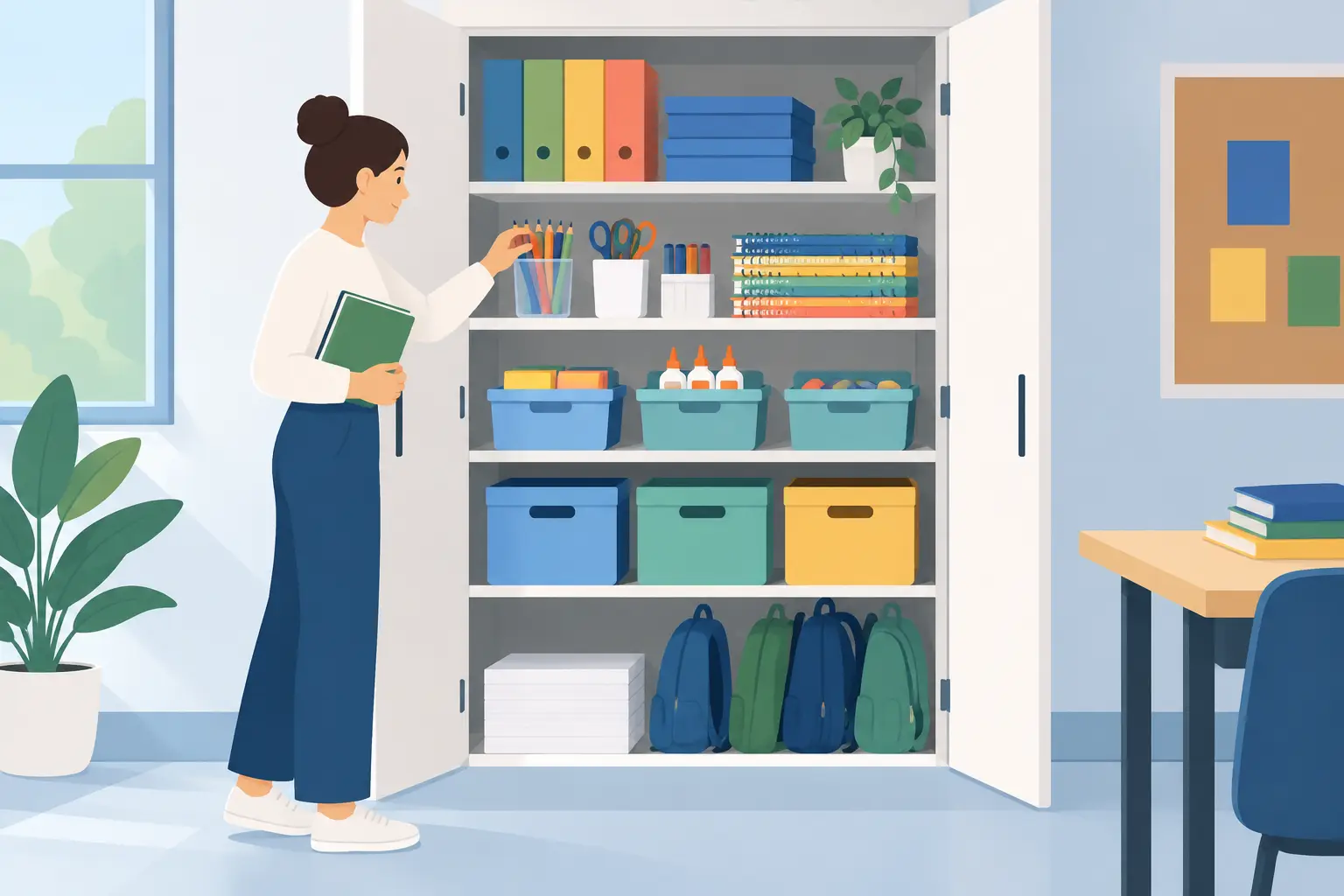
A supply closet does not need complicated software to make a difference. It does need a clear routine. Choose one or two dependable volunteers or staff members to monitor inventory, organize donations, and communicate urgent needs. Label shelves by category and size so items can be found quickly.
Track what comes in and what goes out, even if the record is a basic spreadsheet or paper log. You do not need to collect sensitive information about every family. Instead, count categories: 25 backpacks distributed, 40 hygiene kits provided, 18 uniform shirts requested. These numbers help the team plan ahead and show supporters the direct results of their giving.
Set donation guidelines before a drive begins. Let supporters know which items are needed, what condition is acceptable, where donations should be delivered, and when they are most helpful. A focused request for new notebooks, children’s socks, and deodorant will usually produce better results than a broad request for “anything.”
Storage is a real trade-off. Large donation drives can bring in more than a small school or nonprofit can sort or store. If space is limited, plan seasonal collections or ask donors to give gift cards and funds for specific needs. Financial gifts can help leaders purchase exactly the right sizes and supplies when demand changes.
Invite the whole community into the work
Student supply closets thrive when the responsibility is shared. Families, educators, local businesses, faith communities, neighborhood groups, and youth volunteers can all contribute in meaningful ways. A bookstore may host a notebook drive. A salon can collect hygiene items. A local business may sponsor backpacks for an entire grade level. Older students can help assemble supply kits while learning what community care looks like in action.
Be specific about the impact. Instead of saying that donations “help kids,” explain that $25 may provide a backpack filled with classroom basics, or that a box of new socks gives children a daily essential many families struggle to replace. Clear examples connect generosity to a child’s real school day.
Recognition can encourage continued support, but keep students at the center. Thank donors without turning children’s circumstances into marketing material. Protect privacy in photos, stories, and public updates. The goal is not to showcase hardship. It is to show what a caring community can accomplish together.
Connect supplies with academic support
A full backpack is not the same as a completed education, but it can make learning more possible. Students who have pencils, paper, books, and a quiet sense of belonging are better positioned to participate in tutoring, complete homework, and build confidence in English and math.
That is why supply closets work best as part of a wider support network. When a volunteer notices repeated requests for basic materials, it may point to a family needing additional resources. When a tutor sees a student struggling to practice at home, a take-home learning kit may help. Practical support and academic support should strengthen each other.
At You’re All That Inc., we believe every child has the right to learn and the right to arrive prepared for that opportunity. Donations, volunteer time, community partnerships, and compassionate listening can all help turn that belief into something a student can hold in their hands.
A well-stocked closet will eventually need replenishing. That is not a sign that the work is failing. It is a sign that students are finding support when they need it most. Keep listening, keep organizing, and keep making room for every child to walk into school ready to learn.